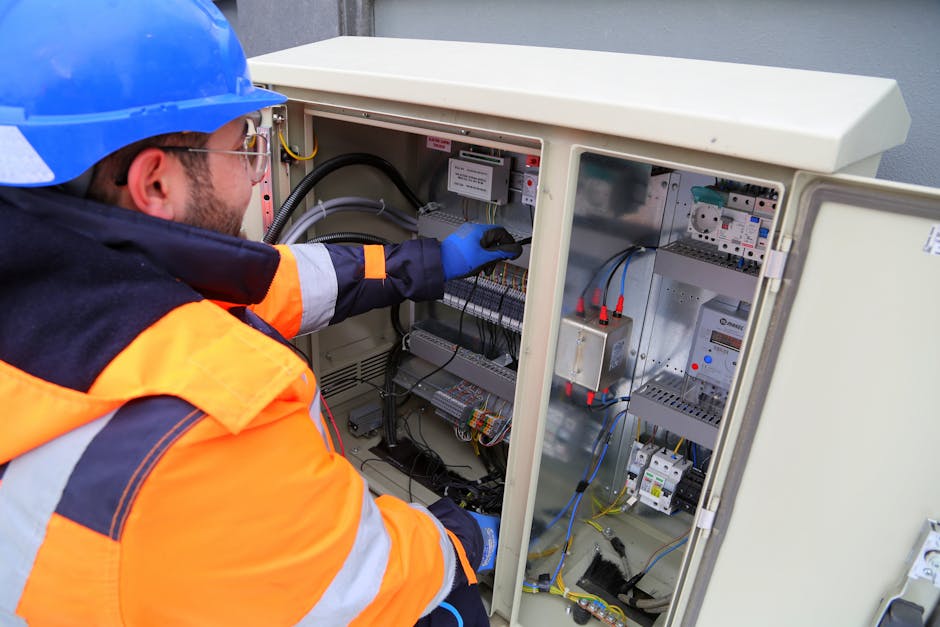
If you're responsible for a commercial or industrial property in North West England, electrical safety checks aren't simply a box-ticking exercise – they're a legal obligation, a critical safeguard for your people, and a frontline defence against costly downtime. After more than 25 years working across factories in Warrington, office complexes in Manchester city centre, and retail parks across Merseyside, I've seen first-hand what happens when electrical maintenance falls down the priority list. The consequences range from insurance claims being rejected to, in the worst cases, serious injury or fire.
This guide breaks down everything a facilities manager, property manager, or business owner needs to know about commercial electrical safety checks – and how to stay on the right side of the regulations.
Your Legal Obligations: What the Law Actually Requires
Under the Electricity at Work Regulations 1989, every employer and duty holder has a legal responsibility to ensure that electrical systems are maintained in a safe condition. The Health and Safety at Work Act 1974 reinforces this by placing a general duty of care on anyone responsible for a workplace.
In practical terms, this means you must:
- Ensure all fixed electrical installations are regularly inspected and tested
- Maintain an up-to-date Electrical Installation Condition Report (EICR)
- Keep portable appliance testing (PAT) records current
- Address any identified defects promptly and document the remedial work
- Use a qualified, competent contractor – ideally one with NICEIC approval – for all inspection and testing work
For commercial premises, the recommended maximum interval for an EICR is every 5 years, though certain environments – such as industrial units, commercial kitchens, or properties with high footfall – may require more frequent testing. If your property is in a sector governed by additional regulatory bodies (healthcare, education, hospitality), shorter intervals are often mandated.
What Does a Commercial Electrical Safety Check Actually Involve?
A comprehensive electrical safety check goes far beyond a visual glance at your distribution boards. When our engineers carry out an inspection at a commercial site – whether it's a logistics warehouse in Trafford Park or a multi-tenanted office block in Chester – here's what the process typically covers:
- Visual inspection of all accessible parts of the installation, including switchgear, distribution boards, wiring systems, and accessories
- Testing of circuits for earth fault loop impedance, insulation resistance, polarity, and RCD operation
- Identification of defects categorised by severity – C1 (danger present), C2 (potentially dangerous), C3 (improvement recommended), and FI (further investigation required)
- Thermal imaging of electrical panels and connections to detect hotspots that indicate loose connections or overloaded circuits – a common issue we find in older industrial premises across Cheshire and Greater Manchester
- A detailed EICR report documenting findings, observations, and any required remedial actions
Any C1 or C2 codes must be addressed as a matter of urgency. I'd strongly advise treating C3 recommendations seriously as well – they often highlight issues that will deteriorate over time and become costly problems if left unattended.
Common Issues We Find in Commercial Properties
Across thousands of inspections, certain problems crop up time and again in commercial and industrial settings across the North West:
- Overloaded circuits – particularly in older buildings where electrical demand has grown significantly since the original installation. We see this regularly in converted mill buildings across Greater Manchester that now house modern businesses.
- Outdated consumer units lacking RCD protection – a significant fire and shock risk that's still surprisingly common in properties built before 2008.
- Poor earthing and bonding – especially in industrial units where modifications have been made over the years without proper electrical oversight.
- Deteriorated wiring in roof spaces, risers, and containment systems – rubber and early PVC cables from the 1960s and 70s are still in service in some Merseyside commercial properties.
- Inadequate labelling of circuits and distribution boards, which creates serious safety risks during maintenance or emergency situations.
A word of caution: If your property has had multiple tenants or undergone several fit-outs over the years, there's a high probability that modifications have been made without proper certification. An EICR will identify these issues before they become dangerous – or before an insurer uses them as grounds to void your cover.
How to Build a Proactive Electrical Maintenance Schedule
The most effective facilities managers I work with don't wait for their five-year EICR to identify problems. They operate a proactive maintenance programme that includes:
- Annual thermal imaging surveys of main switchgear and distribution boards – particularly valuable in manufacturing and data-heavy environments
- Regular PAT testing on a risk-assessed schedule appropriate to the equipment and environment
- Emergency lighting testing – monthly function tests and annual full-duration discharge tests, as required by BS 5266
- RCD testing at quarterly intervals for high-risk environments
- A planned preventative maintenance (PPM) contract with a trusted electrical contractor who knows your site inside and out
This approach not only reduces the risk of unexpected failures and safety incidents but also extends the lifespan of your electrical infrastructure and helps you budget predictably for maintenance costs.
Why NICEIC Approval Matters for Your Business
When selecting an electrical contractor for safety checks, NICEIC approval should be non-negotiable. As an NICEIC-approved contractor, DRM Electrical is regularly assessed to ensure our work meets the highest standards set by BS 7671 (the IET Wiring Regulations). This gives you:
- Confidence that inspections and testing are carried out by competent, qualified engineers
- Compliant certification that satisfies insurers, landlords, local authorities, and regulatory bodies
- Accountability – NICEIC operates a complaints and disputes resolution process, providing an additional layer of protection for you as the client
- Warranty-backed work through the NICEIC Platinum Promise on all notifiable installation work
We've worked with facilities managers across Cheshire, Greater Manchester, and Merseyside who've previously received EICRs from unregistered contractors, only to find the reports were incomplete, inaccurate, or non-compliant. Getting it right first time saves significant time, money, and risk.
Take Control of Your Electrical Compliance
Electrical safety isn't something that can afford to slip through the cracks. Whether you're managing a single commercial unit in Stockport or overseeing a portfolio of industrial sites across the North West, having a clear picture of your electrical installation's condition is fundamental to protecting your people, your property, and your business. If your EICR is due for renewal, if you've inherited a property with unknown electrical history, or if you simply want a second opinion on your current compliance position, our team at DRM Electrical is here to help with straightforward, honest advice and NICEIC-certified expertise you can rely on.
DRM Elec
NICEIC Approved Industrial & Commercial Electricians
Get a Free Quote
Ready to discuss your electrical project? DRM Electrical Services has over 25 years experience serving the North West.
Get a Free Quote